About Us
Welcome to the Ariel Portal, where you can access all our forum theatre-based violence prevention resources. Below you will find an overview of our approach and the evidence of the impacts you can deliver for primary aged children.
About Us
Welcome to the Ariel Portal, where you can access all our forum theatre-based violence prevention resources. Below you will find an overview of our approach and the evidence of the impacts you can deliver for primary aged children.

About the Ariel Portal
Who are we?
Ariel Trust is a child-centred organisation delivering creative, co-produced violence prevention programmes across Merseyside primary schools.
Our resources can support a school to meet the requirements of the Ofsted Inspection Framework; schools and further education providers will now be inspected on how effectively they protect children from involvement in violence and whether they use evidence-based approaches to do so.
Evidence shows that children, particularly those with speech and language support needs, are vulnerable to becoming involved in violence. Interventions that focus on developing social & emotional skills and building confidence in communication and proven to develop protective factors, particularly when used as an early intervention, in primary school.
Utilising Forum Theatre techniques, our resources support teachers to create safe spaces where children actively rehearse responses to grooming, exploitation, online harm, and radicalisation. This theatre-based approach helps to move beyond awareness raising to supporting children to build key skills in resilience and help-seeking communication.
The content in this portal is designed to support teachers to replicate our evidence-based practice. We use scenario-based learning and the programmes are supported by animations and scripts, which have been co-created with children across Merseyside to ensure they reflect the real-life experiences on the intended audience.
Independently evaluated by Liverpool John Moores University on behalf of the Merseyside Violence Reduction Partnership, the programmes have reached over 7,000 students across more than 180 schools. Evidence demonstrates measurable improvements in knowledge, bystander attitudes, and help-seeking behaviours. Crucially, the model extends beyond the classroom, providing opportunities for schools to actively engage parents: children lead Parental Engagement Performances that draw families into the same interactive, reflective process — strengthening the community around the child.
Approach
Our Forum Theatre Approach
Forum theatre is at the heart of how Ariel works with children. Rooted in the pioneering methods of Brazilian theatre practitioner Augusto Boal, it transforms performance from something you watch into something you actively shape.
In our workshops and resources, children don’t just observe a scene unfold — they intervene in it, stepping in to challenge the choices being made and explore what else might be possible. It’s theatre as a rehearsal for real life.
The scenes we use are drawn directly from the situations children encounter — peer pressure, online risks, difficult relationships, moments where it’s hard to know what to do or say. When children watch a scenario play out and then have the power to stop it, rewind it, and try a different approach, something shifts. They move from feeling that difficult situations simply happen to them, to recognising that they have agency, choices, and a voice.
What makes forum theatre so powerful is also what makes it enjoyable. It’s active, collaborative, and genuinely funny at times — children are on their feet, thinking creatively, and learning from each other as much as from any adult in the room. The drama becomes a safe space to take risks, make mistakes, and discover that there’s rarely just one right answer. We also believe firmly that forum theatre isn’t the exclusive territory of specialist drama practitioners.
The core principles — posing a problem, inviting intervention, exploring alternatives together — are skills any teacher can develop and bring into their classroom. Whether it’s a PSHE lesson, an assembly, or a circle time conversation.
Resources
The resources
Ariel is now the leading provider of violence‑prevention education for Key Stage 2, with more than 180 Merseyside schools using our programmes every year.
Our approach focuses on building the core social and emotional skills that protect children from harm strengthening communication, developing vocabulary and boosting confidence through creative, active learning and structured forum theatre. This method is particularly effective for pupils with speech, language and communication needs, helping them find their voice and navigate challenging situations with greater clarity and resilience.
The resources cover five core violence prevention programmes. These are designed to be delivered over a number of sessions, developing key social & emotional skills and addressing multiple national curriculum objectives. These skills are powerful protective factors. They help children recognise risk, resist peer pressure, and stay safe from grooming, exploitation and online/offline harm. Evidence shows that this approach is the best way to deliver behavioural changes.
Each programme offers a half‑term sequence of learning, giving pupils the repetition and depth needed to embed new skills and make meaningful behavioural change. While we encourage schools to deliver a full programme wherever possible, we know curriculum time is tight so our resources are flexible, adaptable and designed to be revisited – we have suggested some shorter delivery options, however, increasing the ‘dose’ over time strengthens the long‑term impact.
We know that early intervention is essential if we want to equip our youngest children with the awareness, language and confidence they need to keep themselves safe. Serious violence doesn’t begin in adolescence, the attitudes, misunderstandings and communication barriers that contribute to risk often start much earlier. That’s why our Key Stage 1 programme, ‘Telling Tales or Asking for Help?’ introduces children to the foundations of help‑seeking and positive bystander behaviour at the very start of their school journey. By teaching pupils how to recognise worry, ask for help and keep trying until they are heard, this resource strengthens the protective skills that reduce vulnerability later in life. It also supports your teaching in meeting the 2026 curriculum guidance, which places a clear emphasis on helping children understand when they feel unsafe, who they can trust, and how to seek support. Early intervention at this stage doesn’t just benefit individual pupils, it contributes to a safer school culture and, over time, a safer wider community.
Skills Development
Evidence-base: Skills Development
Ariel Trust’s forum theatre approach to violence prevention is routed in a well-established evidence-base that has explored what is effective in changing the behaviour of children and in keeping them safe.
A range of research agrees that primarily non – interactive strategies, or those based on knowledge alone are not effective.
Curricula were effective only where they included teaching social competence skills, whereas those focusing on knowledge alone were ineffective. – Thomas et al., 2015
Active learning strategies are key to effective health education, as they allow students to apply knowledge through practice. They identified three active learning strategies which were evidenced in all effective curricula: role play, group cooperation and small group discussion. – Herbert and Lohrmann (2011)
The Youth Endowment Foundation has carried out a systematic review of the evidence in relation to violence prevention education and has identified universal programmes promoting social & emotional learning, like the resources on this site, as supported by a strong evidence-base. They judge that these programmes have a moderate impact and a low cost.
The Forum Theatre approach adopted on this site aligns strongly with several YEF‑recognised high‑impact categories, in addition to social & emotional skills these include:
• Relationship violence prevention lessons and activities
• Cognitive‑behavioural elements (reflection, reframing, problem‑solving)
• Restorative approaches
Our Impacts: Independent Evaluation
Ariel’s resources have been independently evaluated by Liverpool John Moores University during 2022-2025. The full evaluation reports are available here – Initial Report, 2023 / Second Report, 2025.
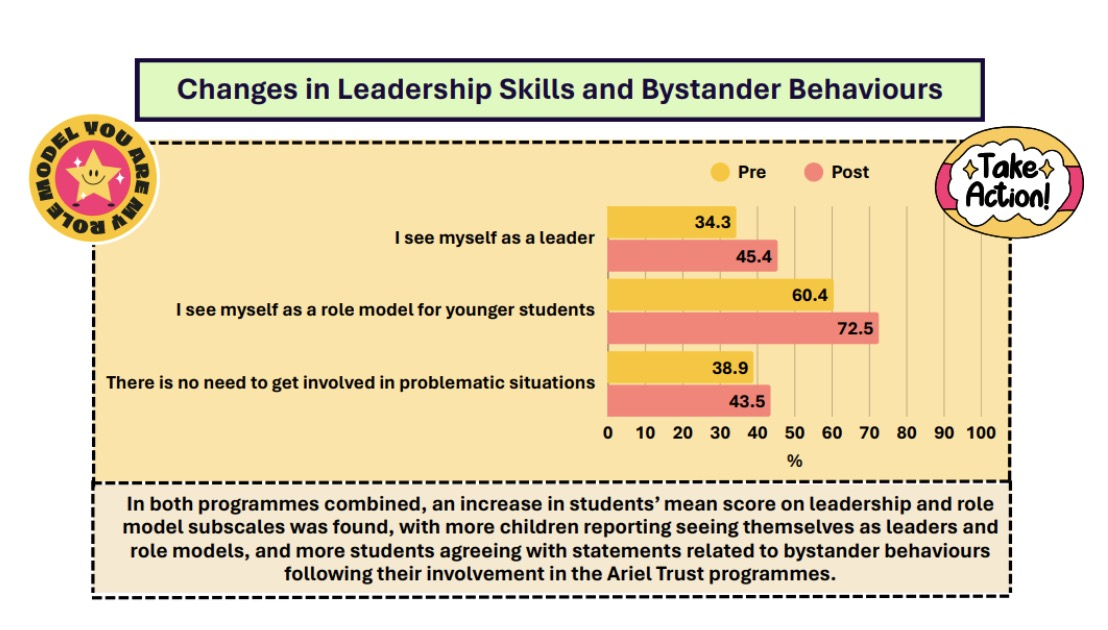
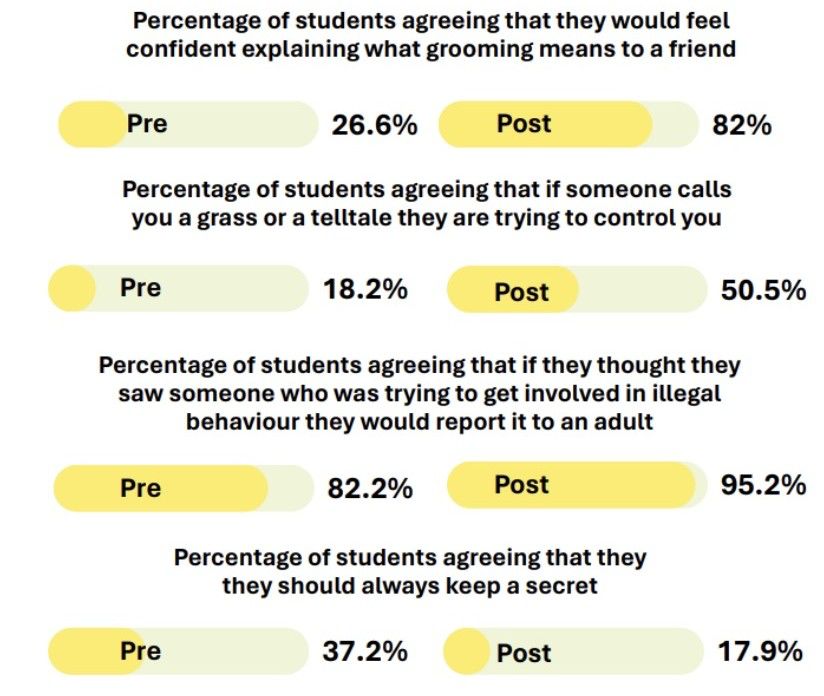
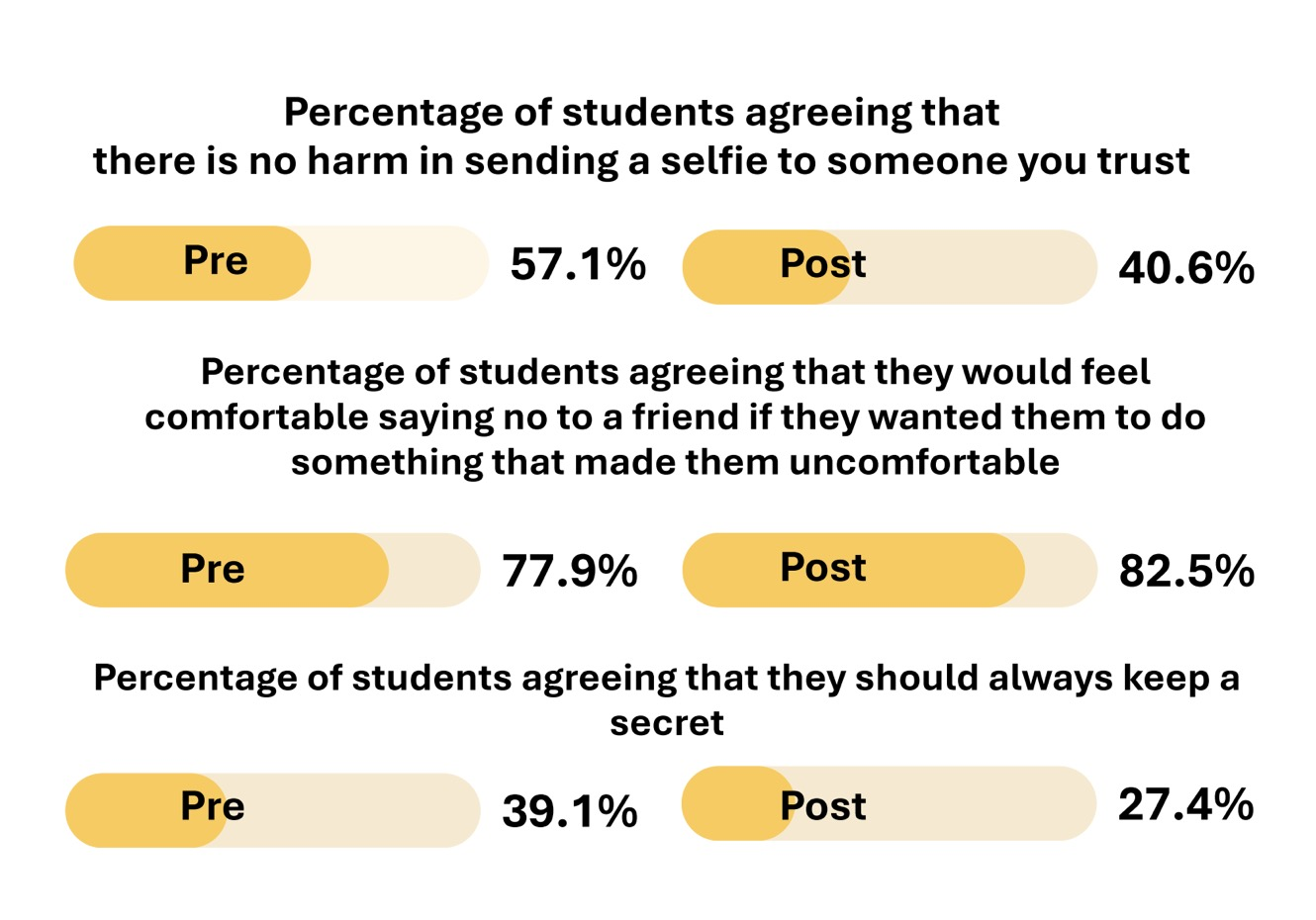
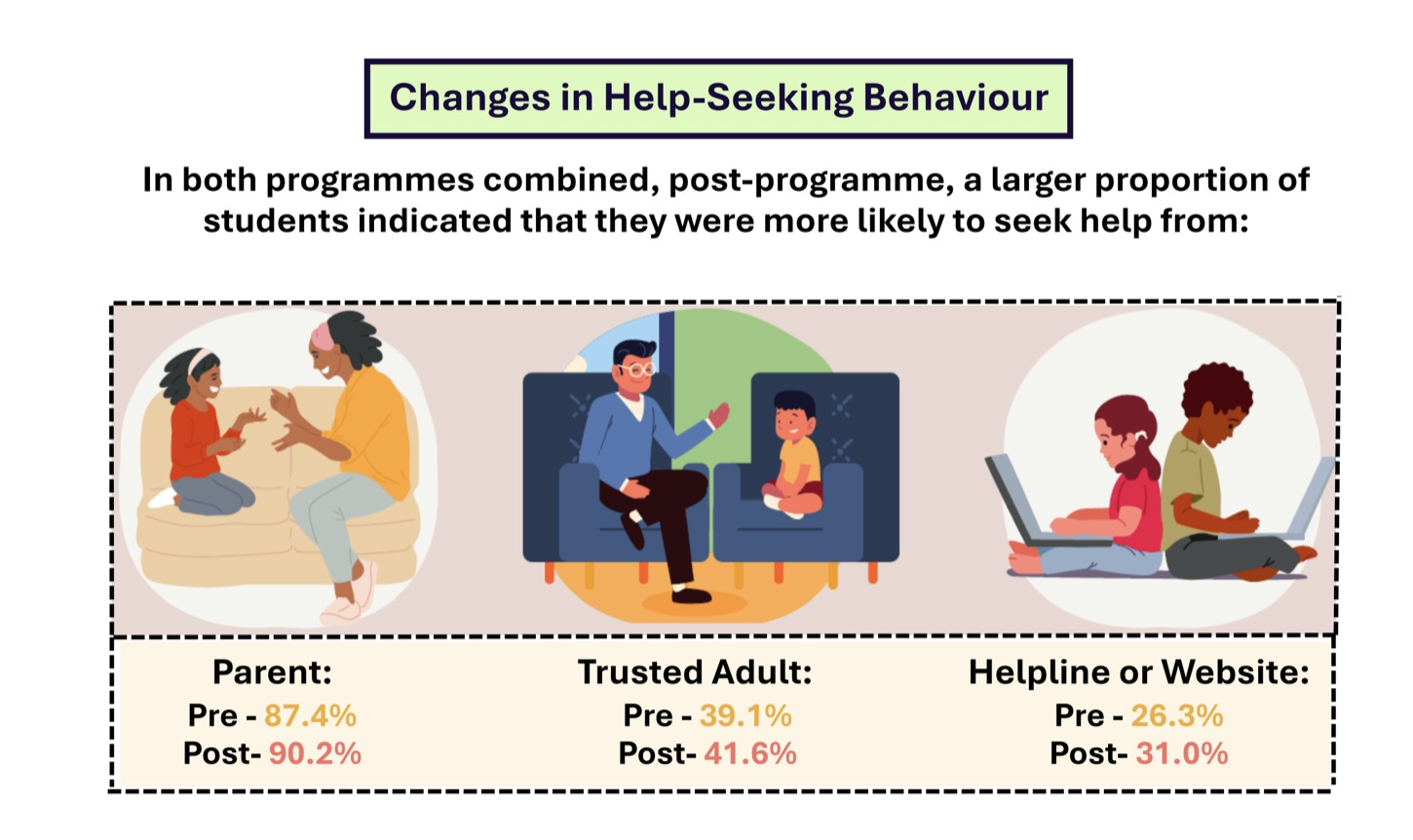
These reports show positive impacts, both in relation to children’s understanding of the themes they were exploring through the programme and also in relation to key skills development. The two skills areas evaluated were help-seeking behaviour and bystander intentions.
Impacts on Awareness
Evidence in relation to Grassing or Grooming?
Evidence in relation to Send me a Selfie.
Evidence of Skills Development
Become a partner dedicated to developing best practice
Ariel Trust is always interested in working with new partners who want to invest time and energy developing best practice in violence reduction. If you would like to have a conversation about becoming a development partner contact
Become a partner dedicated to developing best practice
Ariel Trust is always interested in working with new partners who want to invest time and energy developing best practice in violence reduction. If you would like to have a conversation about becoming a development partner contact